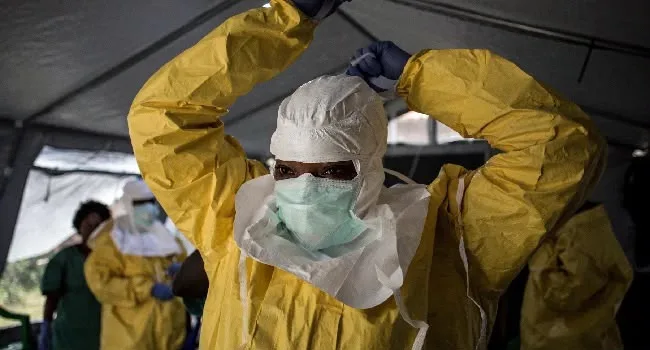
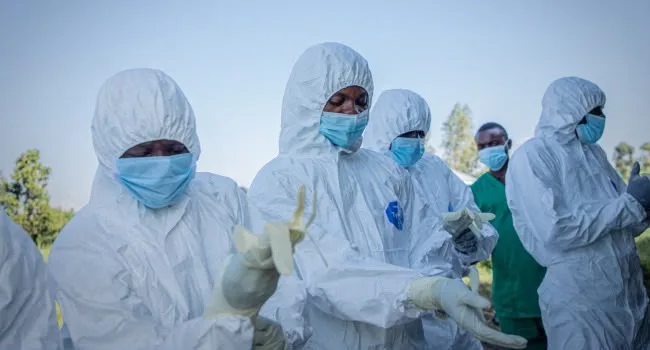
The Ebola outbreak in the Democratic Republic of Congo (DRC) has taken a more alarming turn, with health authorities reporting that the disease is spreading at an unprecedented rate and has claimed more than 2,500 lives.
The United Nations’ senior Ebola coordinator, Julien Harneis, disclosed the figures on Friday while briefing journalists in Geneva from Bunia, the centre of the outbreak.
Harneis said the outbreak had accelerated sharply in recent weeks, noting that about half of the recorded deaths occurred within the past 20 days.
The current outbreak, which was declared on May 15 as the DRC’s 17th, is already the deadliest Ebola epidemic in the country’s history and is expanding across a vast area.
According to Harneis, transmission has now reached a territory larger than France, while the scale and speed of the outbreak are outpacing the international response.
The epidemic has particularly affected remote areas in northern and eastern DRC, where weak government presence, limited healthcare facilities and years of armed conflict have complicated efforts to contain the virus.
Harneis warned that the situation could deteriorate further without an immediate increase in personnel and resources, particularly in hard-to-reach communities.
He said a stronger response could help reduce transmission within months and eventually bring the outbreak under control.
However, he cautioned that failure to strengthen the response would result in more deaths, wider transmission and an increased risk of the virus crossing into neighbouring countries.
The World Health Organisation has previously supported vaccination efforts in the affected areas, but the continuing spread of the disease has placed additional pressure on already limited health resources.