
Steinem died peacefully at her home in New York City on Wednesday, surrounded by loved ones, according to a statement from the Gloria Foundation. The cause of death was not disclosed.
Her death has prompted tributes from political leaders, activists and prominent personalities who described her as a pioneering voice who helped reshape the fight for gender equality in the United States.
Former US Secretary of State Hillary Clinton said Steinem opened opportunities for millions of women who came after her.
Former House Speaker Nancy Pelosi described her as a fearless pioneer who transformed the struggle for equality and inspired generations of women.
Tennis icon Billie Jean King also paid tribute, saying Steinem had passed on a responsibility to future generations to continue the work she started.
Steinem began her career as a journalist during the 1960s, at a time when American women faced significant social and economic restrictions.
She gained national attention in 1963 after investigating the treatment of cocktail waitresses at New York’s Playboy Club, exposing the sexism and exploitation they experienced.
Her path into activism deepened after attending a 1969 meeting where women openly discussed their experiences with abortion. Steinem later revealed that she had undergone an abortion herself in 1957, when the procedure was illegal.
The experience became an important part of her understanding of the struggles women faced over reproductive rights.
During the 1970s, Steinem helped establish Ms. Magazine and the National Women’s Political Caucus. She also played a leading role in organising the first National Women’s Conference in Houston.
For decades, she became a familiar presence at feminist conferences, political rallies and demonstrations, often recognised by her trademark aviator glasses.
Her activism extended beyond the United States, and she continued campaigning for women’s rights well into her later years.
Following the US Supreme Court’s 2022 decision to overturn Roe v. Wade, which had protected abortion rights for decades, Steinem strongly criticised the move and argued that restricting abortion would not eliminate the need for it.
Her philosophy was captured in one of her best-known calls to action: “Don’t agonize. Organize.”
Born in Toledo, Ohio, on March 25, 1934, Steinem experienced an unsettled childhood because her father worked as a travelling salesman.
Her parents separated when she was 10, after which she took on responsibilities caring for her mother, who struggled with mental illness.
As her public profile grew, Steinem also faced intense criticism. Opponents frequently focused on her appearance, her past work as a Playboy Bunny and her decision to remain unmarried and without children in attempts to discredit her activism.
She eventually married businessman David Bale at the age of 66. Bale, the father of actor Christian Bale, died three years later from brain cancer at 62.
Steinem was also a breast cancer survivor, having undergone treatment in the 1980s.
Despite her enormous influence, her career was not without controversy. Some younger feminists criticised her approach as outdated, while others questioned her political positions.
She faced criticism for defending Bill Clinton during allegations of sexual harassment and later apologised after comments she made during Hillary Clinton’s 2016 presidential campaign were widely criticised.
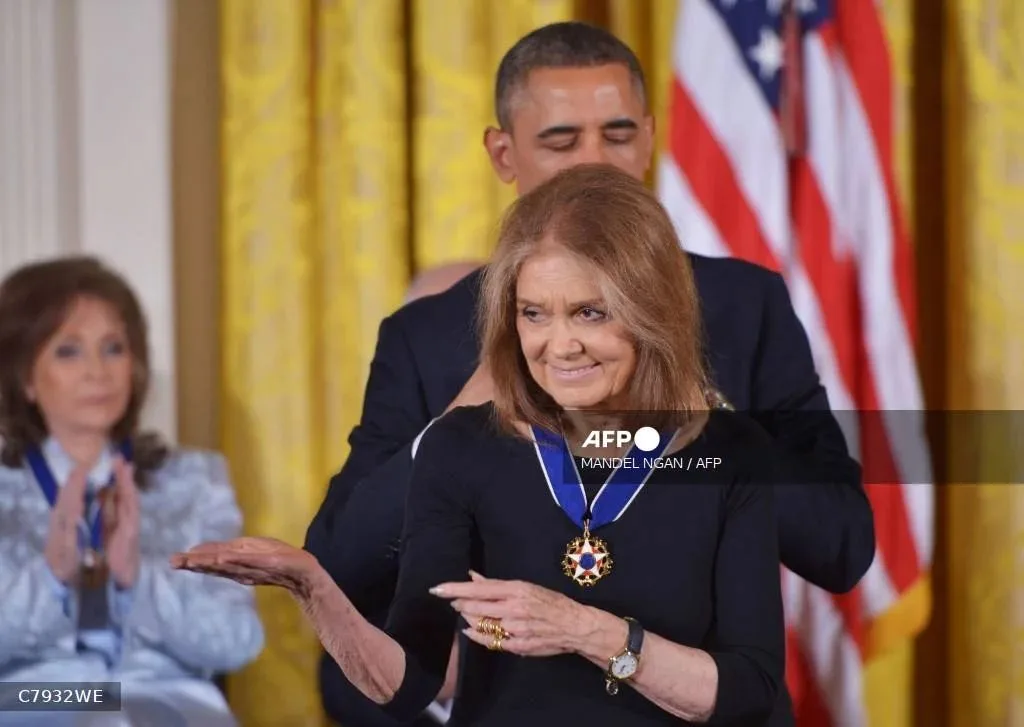
Her contributions nevertheless earned her numerous honours, including the Presidential Medal of Freedom, which former President Barack Obama presented to her in 2013.
Obama, in a tribute on Thursday, described Steinem as a larger-than-life figure who helped draw attention to issues including domestic violence and workplace discrimination.
He said generations of women were standing taller and reaching for greater opportunities because of Steinem’s lifelong activism.
Following news of her death, supporters gathered outside her Manhattan residence to honour her legacy.
For many admirers, Steinem’s death marks the passing of one of the most recognisable voices of modern feminism, but her ideas and activism are expected to continue influencing generations to come.