The Academic Staff Union of Universities, ASUU, has renewed its call on the Federal Government to pay lecturers whose salaries were withheld and resolve other outstanding welfare issues threatening industrial harmony in Nigeria’s public universities.
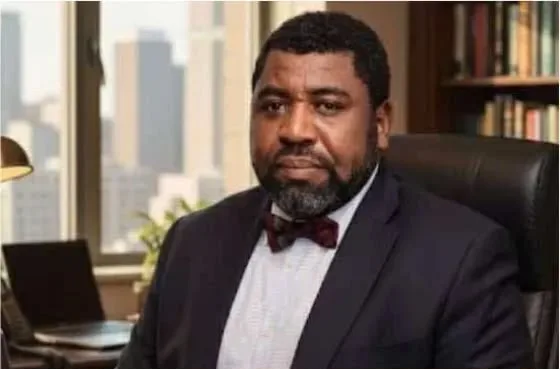
ASUU President, Professor Christopher Piwuna, made the call on Friday during a press briefing at the union’s secretariat at the University of Jos in Plateau State.
Piwuna said the government must urgently implement unresolved provisions of the December 2025 agreement between the Federal Government and ASUU, stressing that doing so would help rebuild lecturers’ confidence and create a better environment for teaching, research and learning.
Beyond university-related concerns, the ASUU president also spoke on Nigeria’s economic challenges, calling for a major change in government policies ahead of the 2027 general elections.
He urged political parties and their candidates to make employment generation, poverty reduction, education, economic growth and improved welfare key priorities in their manifestos.
Piwuna criticised poverty-reduction programmes he associated with the International Monetary Fund and World Bank, arguing that Nigeria needs policies developed around its own economic realities rather than measures that only provide temporary relief.
He called on governments at all levels to invest more heavily in agriculture, manufacturing, social protection and other productive sectors capable of generating employment and reducing the country’s dependence on imports and borrowing.
According to him, unnecessary borrowing should be reduced, while governments should explore alternative and sustainable ways of financing development projects that directly improve citizens’ livelihoods.
He also demanded stronger action against corruption and financial leakages, including the recovery of stolen public funds and greater transparency in the management of government resources.
On taxation, Piwuna advocated a system that places a heavier responsibility on wealthy Nigerians, arguing that those with greater financial capacity should contribute more towards national development.
Turning to education, the ASUU president called for a complete overhaul of Nigeria’s education system to reflect the country’s social, economic, cultural and technological needs.
He said Nigeria should develop an education model suited to its own challenges instead of simply copying systems designed for other countries.
Piwuna stressed the importance of research, technical education, agriculture, innovation and vocational skills, saying these areas were crucial to producing the workforce needed to drive national development and tackle unemployment.
He also called for increased funding and improved infrastructure in public universities, warning that the quality of higher education would continue to suffer without sustainable government investment.
According to him, lecturers cannot perform their duties effectively when issues relating to their salaries and conditions of service remain unresolved.
He maintained that implementing the outstanding provisions of the December 2025 FGN-ASUU agreement would help restore industrial peace and allow academics to concentrate on teaching, research and community service.
Piwuna further linked the problems facing Nigerian universities to the country’s broader economic difficulties, urging the Federal, State and Local Governments to ensure that public policies and spending are genuinely focused on improving citizens’ lives.
As the 2027 elections draw closer, ASUU advised Nigerians to carefully examine the policies being presented by political parties and candidates, particularly their plans for education, employment, poverty reduction, production and social welfare.
The union maintained that Nigeria needs long-term policies capable of expanding its productive capacity and reducing economic dependence, rather than temporary measures aimed only at managing poverty.
Piwuna said ASUU would continue engaging the government and other stakeholders in pursuit of lasting solutions to the challenges facing Nigeria’s universities and the wider economy.