
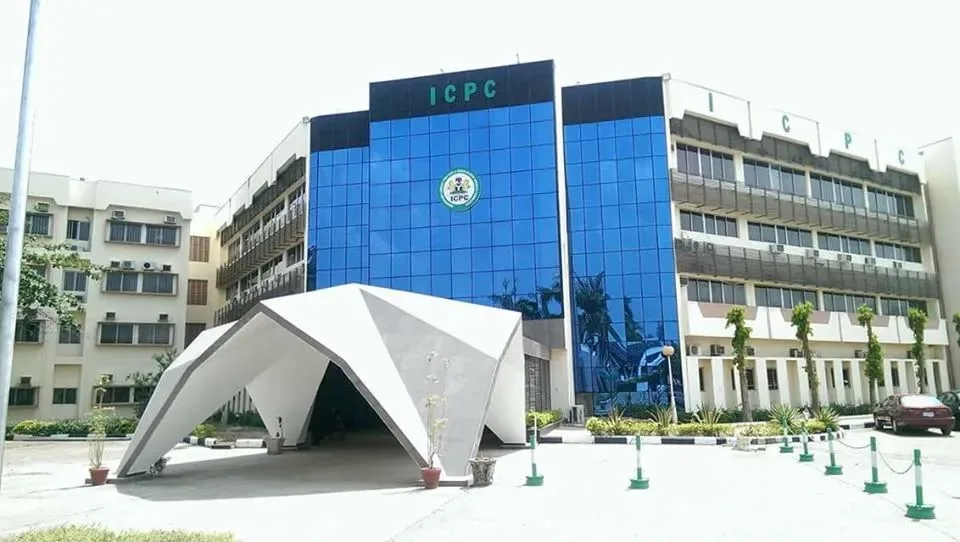
The Independent Corrupt Practices and Other Related Offences Commission (ICPC) has uncovered alleged manipulation of government payroll systems, including cases where public officials reportedly enrolled family members as workers and collected multiple salaries.
The ICPC Chairman, Musa Aliyu, made the disclosure on Thursday in Abuja while delivering the keynote address at the 2026 Economic Confidential Lecture and National Spokespersons Award organised by Image Merchants Promotions Limited.
According to Aliyu, investigations by the commission revealed several instances in which individuals exploited weaknesses in government payroll systems to fraudulently receive multiple salaries.
He said, “We discovered that one person enrolled 14 members of his family. He lived in a religious hotel, a hotel at the public office, receiving salaries.”
Aliyu further disclosed that another individual allegedly added his wife, daughter, son and other relatives to the payroll while collecting a total of 13 salaries.
“Another person enrolled his wife, his daughter, his son, and others and was receiving 13 salaries. ” he said.
The ICPC chairman said the commission had also identified approximately 900 suspected ghost workers and published their names to give the affected individuals an opportunity to establish that they were legitimate employees.
“We now secured income of about 900 ghost workers, which we published their names in papers,” he said.
He explained that the investigation into the suspected ghost workers lasted about a year, during which the commission examined how fictitious names were introduced into government payroll systems.
“We spent one year, one single year, on ghost workers,” Aliyu said.
According to him, investigators discovered instances where the names of suspected ghost workers appeared on official payroll records alongside email addresses, while the corresponding bank accounts were registered in the names of other individuals.
“When they insert their names, you will see their name in the payroll. You will see their email. But when you check the account number, you will see the name of the person. So, that is how these things have been done,” he explained.
Aliyu warned that payroll fraud could have wider financial implications for government beyond the payment of salaries, as fraudulent employees could also generate claims for pensions, housing and health-related benefits.
“Because, you know, once there is a ghost worker, there is ghost pension, there is ghost mortgage, there is ghost housing fund, there is ghost health insurance,” he said.
He said the ICPC’s intervention was aimed at safeguarding public funds and reducing financial leakages capable of undermining the country’s economy.
The commission’s chairman also disclosed that the ICPC recovered more than N24 billion linked to ghost pension payments in 2024.
“In 2024, we recovered over N24 billion ghost workers pension,” Aliyu said.
He said the commission had strengthened collaboration with other government agencies and adopted preventive measures to detect corruption, block leakages and recover public resources.
Aliyu noted that the ICPC was placing greater emphasis on preventing corruption and ensuring that government projects were properly implemented, rather than depending entirely on criminal prosecution.
He said, “It is better for us to do that than to engage in filing criminal charges. How many charges can we file?.”
According to him, the commission had recovered or protected government resources through interventions in public projects and other areas, stressing that its ultimate goal was to ensure that public expenditure translated into tangible benefits for Nigerians.
Aliyu also advocated greater deployment of data and technology in the fight against corruption, stressing that access to credible information and effective communication were critical to strengthening public trust in anti-corruption efforts.
Earlier, the Chief Executive Officer of Image Merchants Promotions Limited, Yusha’u Shuaib, said the lecture was designed to encourage better governance through transparency, accountability and professional communication.
“We are honoured to host yet another gathering of leaders, professionals, scholars, and communication experts committed to strengthening governance, promoting transparency, and advancing excellence in public communication,” Shuaib said.