Iran has proposed a seven-day framework for restoring normal maritime traffic through the strategically important Strait of Hormuz, but reports indicate that US President Donald Trump has rejected the offer.
Iranian Foreign Minister Abbas Araghchi disclosed the proposal on Friday during engagements at the United Nations, amid renewed diplomatic efforts to end the prolonged confrontation between Tehran and Washington.
Araghchi said Tehran had transmitted the proposal to the United States through Qatar, arguing that the strategic waterway could be reopened within seven days if Washington met Iran’s conditions.
“Iran has conveyed to the United States, through Qatar, a concrete seven-day plan. If the necessary conditions are met, the strait can be reopened, and normal maritime passage restored within seven days,” Araghchi said.
He, however, maintained that Iran would not accept what he described as threats, coercion or pressure, insisting that the country would continue to defend its sovereignty.
The proposal reportedly formed part of broader diplomatic efforts on the sidelines of the UN General Assembly in New York, where Iranian and US officials have held indirect discussions.
Araghchi met with US President Donald Trump’s envoy, Steve Witkoff, earlier in the week as both sides explored possible avenues for ending hostilities.
However, hours after the Iranian minister announced the proposal, The Wall Street Journal reported that Trump had turned it down, citing US officials familiar with the discussions.
The report said Trump remained doubtful that Tehran would meet his demands and was considering the possibility of renewed military action.
Trump also shared an image on his Truth Social platform showing the Strait of Hormuz circled and labelled “Trump Strait.”
Under the reported Iranian proposal, hostilities across the Middle East would cease for seven days, including fighting involving Lebanon. Tehran would also seek the release of frozen Iranian assets estimated at more than $12 billion, the lifting of sanctions on its oil exports and an end to the US naval blockade.
Iran would then reopen the Strait of Hormuz at the end of the seven-day truce.
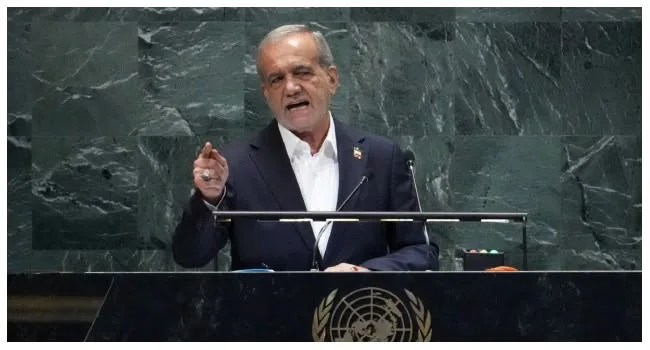
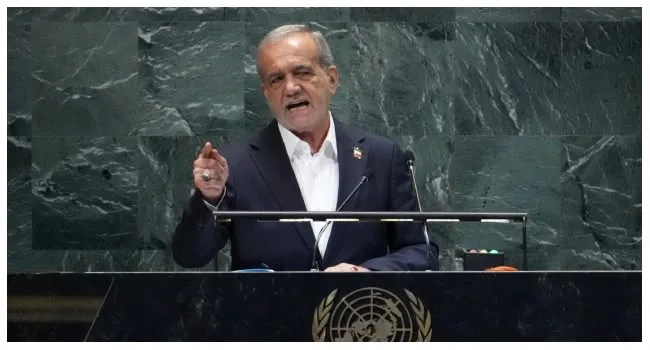
Iranian President Masoud Pezeshkian, speaking to CBS, said the ceasefire process would commence once Washington accepted the proposed framework.
He also referred to an earlier memorandum of understanding reached in Pakistan, saying Iran was prepared to return to the arrangements that existed before the latest escalation if the United States agreed.
Meanwhile, Hossein Mohebi, a spokesperson for Iran’s Revolutionary Guards, said ending hostilities in Yemen was also among Tehran’s conditions.
The Strait of Hormuz has remained a major flashpoint in the confrontation because of its importance to global energy shipments. Iran requires vessels using the waterway to obtain authorisation before passage, citing security and sovereignty concerns.
The latest diplomatic initiative follows the collapse of a June memorandum of understanding between the United States and Iran that was intended to pave the way for an end to the conflict, the reopening of the strait and renewed negotiations over Tehran’s nuclear programme.
Tensions subsequently escalated after Iran fired on commercial vessels in the waterway, accusing them of deviating from authorised routes, while the United States has carried out intermittent strikes on Iranian coastal positions in response.