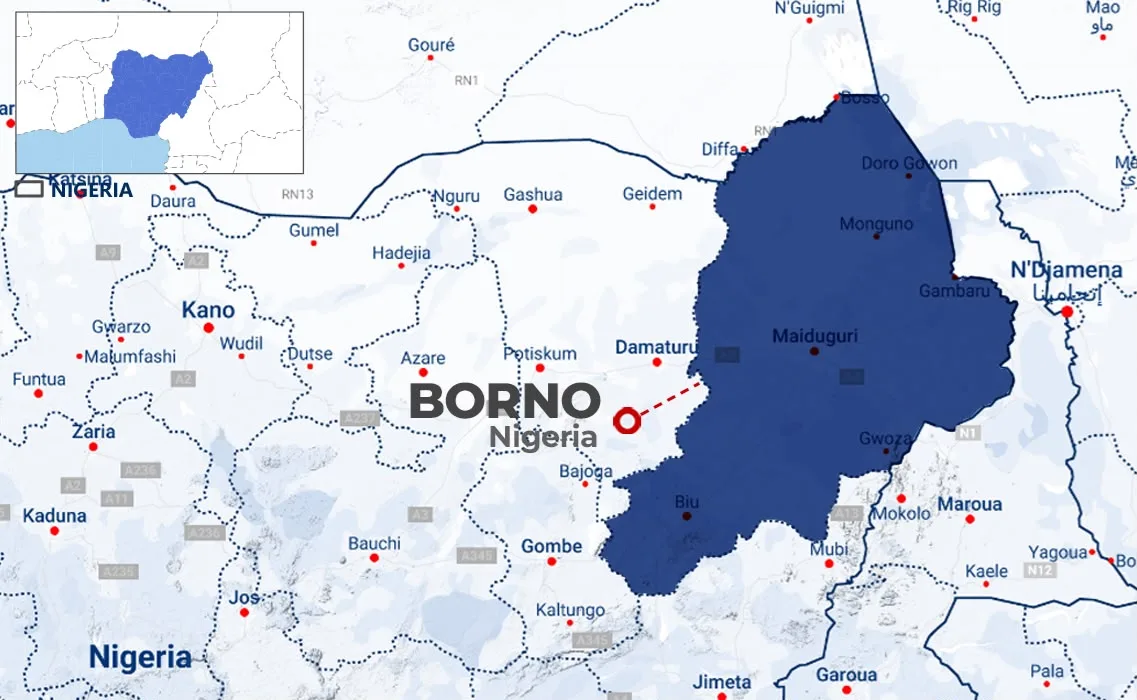
More than 40 Islamic State West Africa Province (ISWAP) fighters, including a senior commander, have been killed in a military air strike on a terrorist hideout in Badu Village, south of Gudumbali, Guzamala Local Government Area of Borno State.
The Nigerian military disclosed this in a statement issued on Monday by the Military Information Officer, Headquarters Joint Task Force (North East), Operation Hadin Kai, Captain Mohammed Goni, in Maiduguri.
According to the statement, the operation followed credible intelligence indicating that ISWAP fighters were gathering in the area to launch coordinated attacks on troops operating under Sector 3.
The military said the Air Component swiftly deployed aerial surveillance to track the fighters, identify their movements and locate suspected hideouts and logistics facilities before launching a precision strike on a building occupied by the terrorists.
Preliminary human intelligence and battle damage assessments indicated that more than 40 fighters, including a prominent ISWAP commander known as a Qaid, were killed in the operation.
The strike also destroyed two vehicles and about 20 motorcycles reportedly used by the group for transportation, logistics and offensive operations.
The military said the destruction of the assets had weakened the fighters’ operational capacity and disrupted their planned attacks on military positions and nearby communities.
Further intelligence revealed that the fighters belonged to ISWAP’s Murabitun unit, a specialised mobile fighting group responsible for patrols, coordinating attacks and sustaining terrorist activities in the area.
According to the statement, the destruction of the enclave and its associated assets represents a significant blow to the group’s ability to carry out attacks and maintain its operations in the Lake Chad region.
The military added that further assessments were underway to determine the full impact of the air strike.
It described the operation as evidence of the effectiveness of intelligence-driven, technology-supported and coordinated air operations in dismantling terrorist networks and restricting their movements.
The Joint Task Force reaffirmed its commitment to eliminating terrorist threats, protecting vulnerable communities and sustaining efforts to restore lasting peace and stability across the North-East.