
Former Kaduna State Governor Nasir Ahmad El-Rufai has been diagnosed with a bloodstream infection involving vancomycin-resistant Enterococcus faecium, according to laboratory findings dated October 16, 2026.
The report, issued by Clina-Lancet Laboratories in Abuja, identified the bacterium in a blood culture and classified it as resistant to vancomycin, an antibiotic used to treat certain serious bacterial infections.
However, the laboratory results indicated that the organism was susceptible to several other antibiotics, including ampicillin or amoxicillin, gentamicin, erythromycin, levofloxacin, minocycline and linezolid.
The October 16 document was marked as an interim report pending final verification.
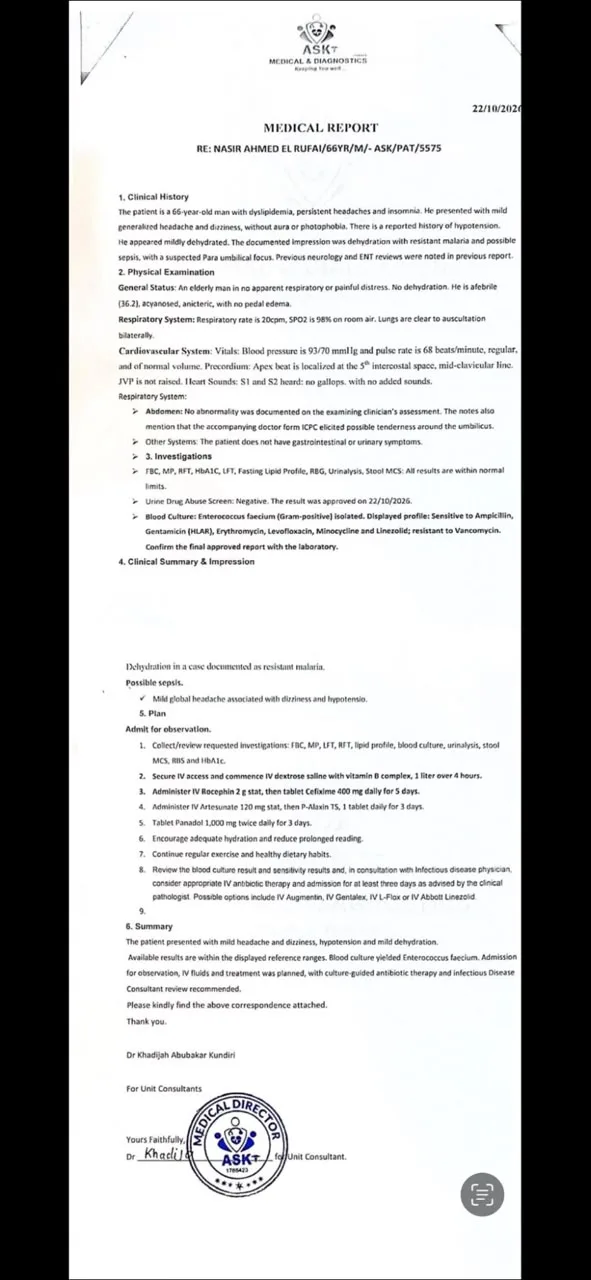
A separate medical report dated October 22, issued by ASK Medical and Diagnostics, documented several health concerns involving the 66-year-old former governor, including persistent headaches, insomnia, dizziness, dyslipidaemia and low blood pressure.
According to the report, El-Rufai presented with mild, generalised headaches and dizziness, alongside a history of hypotension. His earlier clinical assessment had also raised concerns about dehydration associated with resistant malaria and possible sepsis.
The examination recorded his blood pressure at 93/70 mmHg, pulse rate at 68 beats per minute, respiratory rate at 20 breaths per minute and oxygen saturation at 98 per cent while breathing room air.
Although the report stated that he showed no apparent respiratory or painful distress, it documented concerns about his symptoms and the possibility of a serious infection.
The clinical summary listed dehydration, resistant malaria, possible sepsis, headaches, dizziness and hypotension. It also highlighted the positive blood culture for Enterococcus faecium.
Sepsis is a potentially life-threatening condition in which the body's response to an infection causes damage to its own tissues and organs.
The attending doctor recommended hospital admission for observation, intravenous fluids and further treatment. The proposed management plan also included medications and a review of the blood culture and antibiotic susceptibility results in consultation with an infectious disease specialist.
The report further recommended that antibiotic treatment be guided by the laboratory findings and specialist assessment. It listed possible treatment options, including intravenous Augmentin, Gentacel, Flox and intravenous or oral linezolid.
At least three days of hospital admission was recommended, alongside specialist review and culture-guided treatment.
The medical development comes amid ongoing legal proceedings involving the former governor over allegations of unlawfully intercepting telephone communications associated with National Security Adviser Nuhu Ribadu.
On Monday, October 26, Justice Joyce Abdulmalik of the Federal High Court in Abuja dismissed El-Rufai’s no-case submission and directed him to enter his defence if he wished.
The judge ruled that the prosecution had presented sufficient evidence to require a response from the defendant. The case was subsequently adjourned until November 25, 2026, for the defence stage.
El-Rufai had urged the court to discharge and acquit him, arguing through his lawyers that the prosecution had failed to establish a case requiring him to defend himself. The prosecution opposed the application, maintaining that the evidence warranted the continuation of the trial.
The Department of State Services instituted the case over allegations that the former governor unlawfully intercepted telephone communications linked to Ribadu.
In a separate political development, former Vice-President Atiku Abubakar named El-Rufai as deputy chairman of his presidential campaign council under the African Democratic Congress.
The campaign council, announced on September 24, is chaired by Kashim Ibrahim-Imam, while Senator Austin Akobundu serves as director-general and campaign manager.