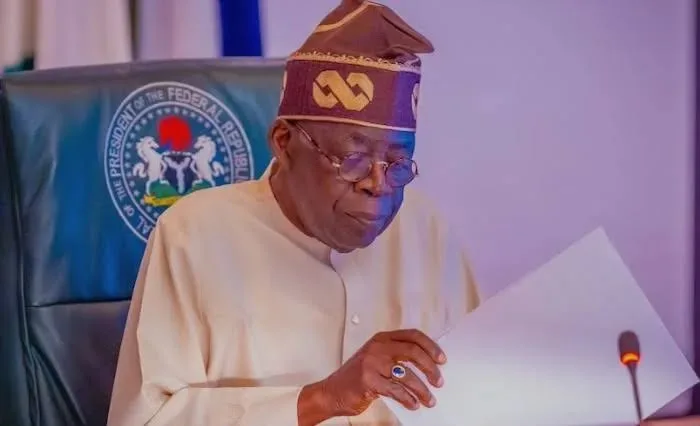
President Bola Tinubu has asked the Senate to amend Nigeria’s law on the transfer of convicted offenders to enable the country to implement prisoner-transfer agreements with nations outside the Commonwealth.
The proposed legislation, titled the Transfer of Convicted Offenders (Enactment and Enforcement) Amendment Bill, 2026, was transmitted to the Senate for consideration.
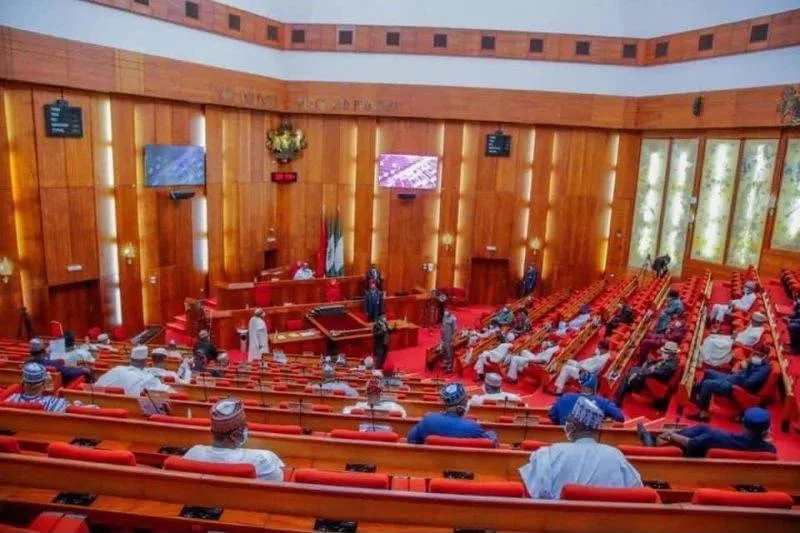
Senate President Godswill Akpabio read the President’s letter during Tuesday’s plenary, in which Tinubu urged lawmakers to give the bill expeditious consideration.
The amendment seeks to revise the Transfer of Convicted Offenders (Enactment and Enforcement) Act, Cap. T16, Laws of the Federation of Nigeria, 2004, to strengthen the legal framework for transferring convicted persons between Nigeria and other countries.
According to the President, the proposed law would provide a basis for implementing agreements or arrangements reached between the Federal Government and foreign governments concerning the transfer of convicted offenders.
A major provision of the bill would empower the President to extend the application of the Act to countries with which Nigeria has entered into relevant agreements through an order published in the Federal Gazette.
Tinubu explained that the amendment would enable Nigeria to give effect to prisoner-transfer agreements with countries beyond the Commonwealth, thereby expanding the scope of international cooperation in this area.
Under prisoner-transfer arrangements, convicted persons may be transferred to another country to serve their sentences under mutually agreed conditions. Such agreements establish the legal framework for managing the transfer of offenders between different jurisdictions.
The proposed amendment, however, must pass through the National Assembly’s legislative process before it can become law.
In his letter, Tinubu expressed hope that the Senate would consider the proposal promptly, appealing to Akpabio and other lawmakers to facilitate its passage.
The bill was transmitted to the Senate in accordance with Section 58(2) of the 1999 Constitution, as amended, which provides for the President’s role in the legislative process.