The government has constituted a committee involving the Nigeria Police Force, Nigerian Communications Commission, National Emergency Management Agency, Federal Road Safety Corps and other relevant agencies to produce a comprehensive roadmap and standard operating procedures for the service.
The framework will subsequently be presented to the National Economic Council for formal approval.
The development was disclosed on Tuesday in a statement by the Senior Special Assistant to the President on Media and Communications, Office of the Vice President, Stanley Nkwocha.
The National Economic Council had earlier approved 112 as Nigeria’s single, toll-free emergency number, replacing the multiple emergency lines currently operated by different agencies.
The initiative is intended to provide Nigerians with a faster and simpler channel for seeking help during emergencies, including accidents, fires, medical crises, security threats and other life-threatening situations.
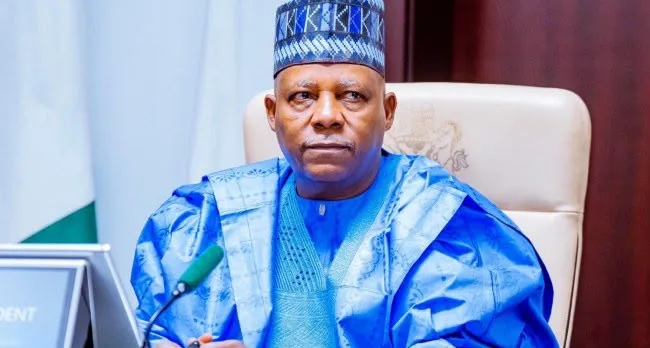
Speaking at a stakeholders’ meeting on the National Emergency Number 112 Project in Abuja, Vice President Kashim Shettima directed members of the committee to develop the framework in line with international best practices.
Shettima urged the stakeholders to accelerate the process and ensure that the meeting produced concrete steps towards implementation.
He also assured the agencies involved that the necessary financial resources would be provided to support the project once the implementation framework is finalised.
“Let’s make progress so that whatever time we have spent here is worth spending. And most importantly, the engine is finance. It is resources to drive the process. And I want to assure you that we will get the resources,” the Vice President
said.
The Inspector-General of Police, Olatunji Rilwan Disu, pledged the full support of the Nigeria Police Force for the adoption of 112 as the country’s unified emergency line.
Disu described the initiative as “a significant step towards ensuring that citizens have a simple and reliable means of accessing emergency assistance.”
He noted that people caught in emergencies such as armed attacks, road crashes, fires, medical crises and kidnapping often face the additional challenge of identifying the appropriate agency to contact.
According to him, a single emergency number would eliminate that difficulty by ensuring that calls are directed to the relevant response agency.
Earlier, the Personal Assistant to the President on e-Governance in the Office of the Vice President, Lydia Aina, said Nigeria’s emergency response system was currently spread across several agencies, jurisdictions and platforms.
She said the fragmented structure had affected the way emergencies were received, coordinated and managed, making the proposed national system necessary.
Aina said the government’s objective was to transition from separate state-based arrangements to a coordinated national emergency response system.
She explained that the stakeholders’ meeting was focused on establishing the infrastructure, personnel, agency responsibilities and operational standards required to make the 112 service effective.
“Our job now is to turn it into an actual working programme with milestones. So, we have identified six immediate priorities. First, governance. We need a clear structure of who’s responsible for what,” she said.
The Director-General of NEMA,
Zubaida Umar; Corps Marshal of the FRSC, Shehu Mohammed; and Director-General of the National Orientation Agency, Lanre Issa-Onilu, were among other stakeholders who pledged their agencies’ support for the implementation of the unified emergency number.