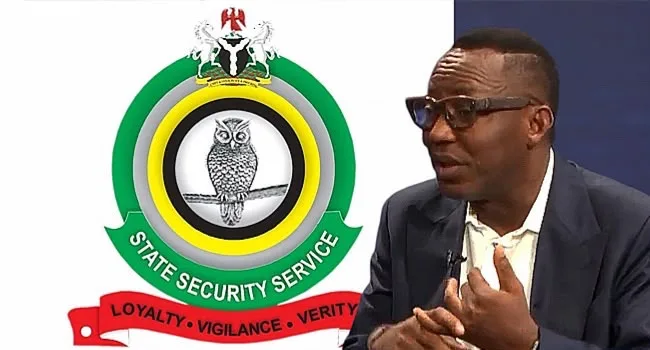
The prosecution has challenged the demand by the defence for the Director General of the Department of State Services (DSS), Oluwatosin Ajayi, to personally appear in court as a defence witness in the trial of African Action Congress presidential candidate, Omoyele Sowore.
At the resumed proceedings, prosecuting counsel, Akinlolu Kehinde, SAN, argued that the defence was wrong to insist that Ajayi must honour the subpoena in person.
Kehinde relied on the Supreme Court judgment in Ishaq v. Soniyi (2002) ALL FWLR (Pt. 498) 347 at 373, which he said established that where a subpoena is issued to a named public officer, it would be unreasonable to interpret it as requiring only that particular officer to appear.
The prosecution counsel also reminded the court that the Attorney General of the Federation, who led the prosecution team on July 28, 2026, had previously made a similar submission.
According to Kehinde, the parties subsequently agreed that an appropriate DSS official could be nominated to represent the Director General and testify on his behalf.
He told the court that, pursuant to the agreement, a DSS officer had been designated and was available in court to give evidence.
Kehinde further argued that Ajayi had no personal interest in the case, noting that the actions under examination were carried out by the DSS in the course of its official duties.
He said requiring the DSS Director General to personally attend proceedings in every case involving the Service would be impractical, particularly because the DSS has matters pending before various divisions of the Federal High Court.
However, defence counsel, Adeyinka Olumide-Fusika, SAN, disputed the prosecution’s position, accusing it of backing away from the understanding that had allowed another DSS official to appear for the Director General.
Olumide-Fusika said the prosecution failed to produce the designated official on the previous adjourned date, despite the alleged agreement.
He maintained that because the subpoena and hearing notice were issued in Ajayi’s name, the DSS chief was obligated to appear personally.
The defence lawyer said the decision to subpoena Ajayi personally followed evidence given by the second defence witness, Uwem Davies, a DSS official.
He argued that Davies had repeatedly indicated during his testimony that some questions could only be properly answered by the Director General.
After hearing arguments from both sides, Justice Mohammed Umar adjourned the case until October 6, 2026, for a ruling on whether the DSS Director General can be compelled to personally appear and testify as a defence witness over actions carried out by the Service.
Sowore is facing trial over alleged cyberbullying linked to posts he made on X, formerly Twitter, and Facebook in August 2025, in which he referred to President Bola Tinubu as a “criminal” and accused him of misrepresenting the extent of corruption in Nigeria.