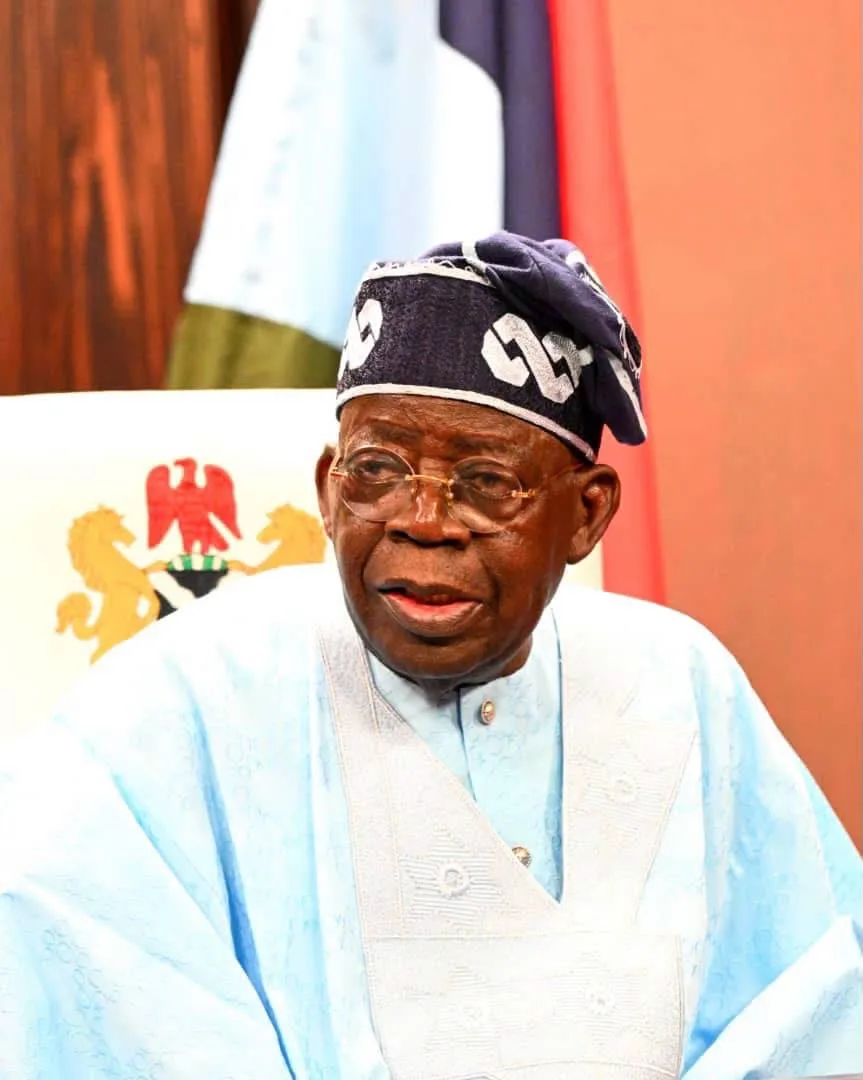
President Bola Tinubu has justified his administration’s plan to secure additional foreign loans, arguing that massive investment in infrastructure is necessary to grow Nigeria’s economy to $1 trillion by 2030.
The President said the proposed borrowing would finance major infrastructure projects, including road construction, electricity improvements and port modernisation, while creating employment opportunities and boosting economic activities.
His position comes amid growing concerns from the Nigeria Labour Congress (NLC) over the Federal Government’s request for legislative approval to obtain $20.5 billion and €1.45 billion in foreign loans.
The labour union has questioned the need for further borrowing, particularly following the removal of petrol subsidy, which the government has repeatedly identified as a major source of additional revenue.
Tinubu, however, maintained that the debate should focus on the benefits of the proposed loans rather than the amount involved.
In a statement titled From Reforms to Delivery: Our Infrastructure Investment and Growth Strategy, the President said the borrowed funds would support projects capable of transforming the country’s economy.
“The key question is not how much we borrow, but what we build, the value we create and the future we leave behind,” he said.
Among the projects identified for funding are the Lagos-Calabar Coastal Highway, Sokoto-Badagry Superhighway, Trans-Sahara Superhighway, improvements to the national electricity grid and the rehabilitation of major commercial ports in Lagos.
He said the projects, together with investments in healthcare, education and vocational training, would improve connectivity between economic centres, lower transportation costs, strengthen agricultural and industrial production and encourage private sector investment.
According to Tinubu, the Lagos-Calabar Coastal Highway could cut transportation expenses along its corridor by between 15 and 20 per cent and contribute as much as two per cent to the country’s Gross Domestic Product through increased trade, tourism and industrial activities.
He added that construction of the highway was expected to generate approximately 100,000 direct jobs in the engineering and construction sectors, alongside over 150,000 indirect employment opportunities in logistics, building materials and related industries.
“We are building more than highways. We are opening economic corridors, connecting markets, supporting industries and reshaping Nigeria’s economic geography,” the President stated.
Tinubu argued that Nigeria must expand its infrastructure capacity to accommodate the scale of economic growth envisioned under his administration.
“We cannot build a $1 trillion economy with infrastructure designed for an economy a fraction of that size,” he added.
TINUBU HIGHLIGHTS ECONOMIC IMPROVEMENTS
The President also defended the government’s economic policies, pointing to improvements in key economic indicators since the introduction of major reforms in May 2023.
He identified the removal of petrol subsidy, exchange rate unification, tax reforms and measures to moderate inflation as steps that had improved government revenue and strengthened economic management.
Tinubu said Nigeria recorded economic growth of 4.43 per cent in the second quarter of 2026, while headline inflation declined to 14.63 per cent in September from 20.98 per cent during the corresponding period in 2025.
He further disclosed that the country’s gross external reserves reached $55.1 billion as of October 9, 2026, with net reserves accounting for approximately $46 billion.
The President also said Nigeria’s tax-to-GDP ratio had increased from seven per cent to 12.5 per cent, while net allocations from the Federation Account Allocation Committee rose by 44 per cent, from ₦15.2 trillion in 2024 to ₦21.9 trillion in 2025.
According to him, the developments have strengthened international investor confidence and improved Nigeria’s ability to secure financing under more favourable conditions.
He cited positive evaluations by international credit rating agencies, Nigeria’s return to Frontier Market status and its successful Eurobond issuance as evidence of growing confidence in the country’s economy.
“These are not political endorsements; they are independent assessments by global rating agencies, index providers, regulators and investors, recognising stronger external reserves, improved macroeconomic management and greater financial credibility,” he said.
Tinubu explained that the government was pursuing long-term financing arrangements to ensure that repayment periods correspond with the expected lifespan of the infrastructure projects being funded.
He said the approach would ease the pressure associated with frequent debt repayments and provide access to more favourable borrowing conditions.
However, the President acknowledged the need for fiscal discipline, revealing that public debt stood at 35.75 per cent of GDP in the second quarter of 2026, while debt servicing consumed approximately 65 per cent of government revenue in the first half of the year.
He said the Federal Executive Council’s economic strategy included avoiding the printing of money to finance budget deficits and ensuring that government spending commitments were supported by available funds, particularly during the pre-election period.
NLC CHALLENGES FG OVER ADDITIONAL BORROWING
Meanwhile, the Nigeria Labour Congress has demanded an explanation from the Federal Government over its continued pursuit of foreign loans despite claims that revenue has increased following the removal of petrol subsidy.
NLC President, Joe Ajaero, raised the concerns during an appearance on Channels Television’s The Morning Brief, questioning why Nigeria continued to seek financial assistance from institutions such as the International Monetary Fund and the World Bank.
Ajaero argued that the government should account for the additional revenue generated from the subsidy removal before committing the country to further borrowing.
“If you come out to tell us that subsidy is gone, that you are making more money and then you are giving more money to states, what is the justification for continually borrowing from the International Monetary Fund and the World Bank and other agencies when there is enough money?” he asked.
The labour leader also pointed to the recent increase in global crude oil prices, saying it should prompt the government to reconsider its borrowing plans.
He noted that the 2026 budget was prepared using an oil price benchmark of $70 per barrel, but international crude prices had climbed above $100 per barrel amid tensions involving the United States and Iran.
“If the 2026 budget was prepared with crude oil price benchmarked at $70 per barrel and now sells above $100 per barrel due to the US-Iran crisis, should this country still be taking loans?” he queried.
Ajaero further questioned the implications of additional borrowing for Nigeria’s debt burden, insisting that increased oil earnings and higher allocations to oil-producing states warranted greater transparency from the government.
He clarified, however, that the NLC had no constitutional responsibility to approve or reject government borrowing, noting that the decision rested with the appropriate government institutions.
He urged Nigerians and relevant oversight bodies to demand accountability and a clear explanation of how the proposed loans would be utilised.
Responding to concerns surrounding the borrowing plan, Tinubu maintained that its success would ultimately depend on the completion of the proposed projects and their impact on citizens.
“Securing financing is only the beginning. The real achievement lies in completing projects, delivering value for money, and improving Nigerians’ lives,” he said.