The Federal Government has approved a ₦70,000 transport intervention for workers across all levels for six months, starting in November 2026, following a conciliation meeting with the leadership of the Nigeria Labour Congress (NLC).
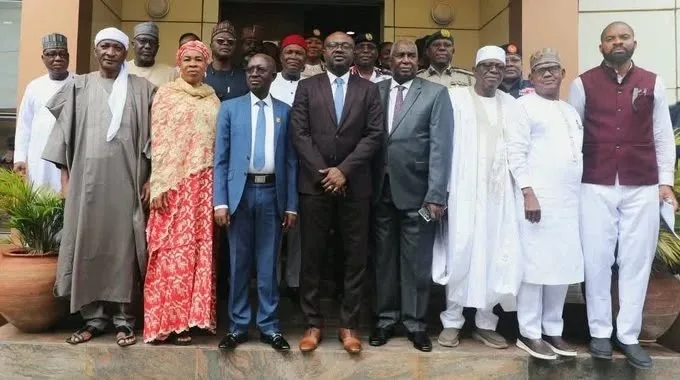
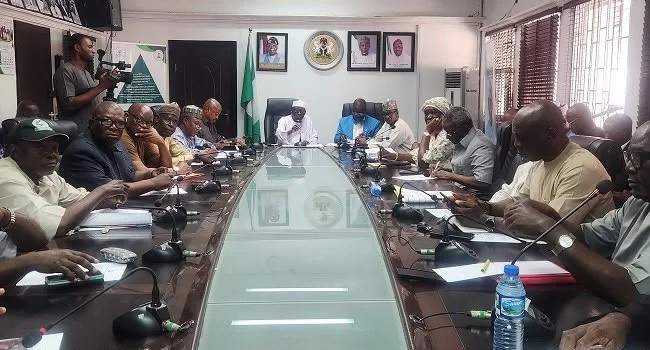
The agreement was reached on Tuesday, October 27, during a meeting convened by the Federal Ministry of Labour and Employment in Abuja to resolve outstanding issues raised by organised labour.
The government also approved the payment of outstanding peculiar allowance arrears dating back to May 1, 2026, with disbursement scheduled to begin in November in three equal monthly instalments.
The resolutions were contained in a statement issued by the ministry after the meeting, which was chaired by the Minister of Labour and Employment, Dr Muhammad Maigari Dingyadi. The NLC delegation was led by its President, Joe Ajaero.
According to the statement, the transport intervention will run for six months, beginning in November, while the peculiar allowance arrears will be paid in instalments over three months.
The meeting also addressed outstanding allowances owed to health workers. The government agreed to clear 19 months of arrears within three months, commencing in December 2026.
On hazard allowances for agricultural workers, the ministry disclosed that the Federal Ministry of Agriculture and Food Security had submitted the list of beneficiaries and the associated costs to the National Salaries, Incomes and Wages Commission (NSIWC) for verification.
The verification process is expected to be completed within two weeks, after which the commission will provide a framework for implementation.
The parties also discussed the proposed adjustment to the Consolidated Health Salary Structure (CONHESS). The NSIWC is expected to conclude the review of the financial implications within three weeks, paving the way for the Presidential Committee on Salaries to consider the adjustment.
However, the government and organised labour did not reach an agreement on the commencement date for implementing the national minimum wage. Both sides agreed that the Minimum Wage Negotiation Committee would be constituted and begin its meetings immediately.
The issue of tax relief for workers was also discussed, but the ministry said it would be referred to the National Executive Council for consideration, noting that taxation is governed by statutory provisions.
The latest meeting followed an earlier conciliation session held on October 22, amid continuing discussions on demands raised by the NLC’s Central Working Committee and National Executive Council.
The government and labour representatives agreed to meet again in one month to review progress on implementing the resolutions.
They also urged state and local governments to participate in the intervention process and encouraged labour unions to engage authorities at their respective levels to ensure the agreements are implemented.